
“`html
Key Takeaways
- Severe floods have drastically impacted beekeeping activities in Imphal East District.
- Many beekeepers have lost their bee colonies to flooding and heavy rains.
- Environmental changes have affected the bees’ forage and nectar collection.
- Farmlands submerged under water further strain the beekeeping community.
- Local authorities are attempting to offer relief, but challenges persist.
- The economic impact on beekeepers has been substantial and widespread.
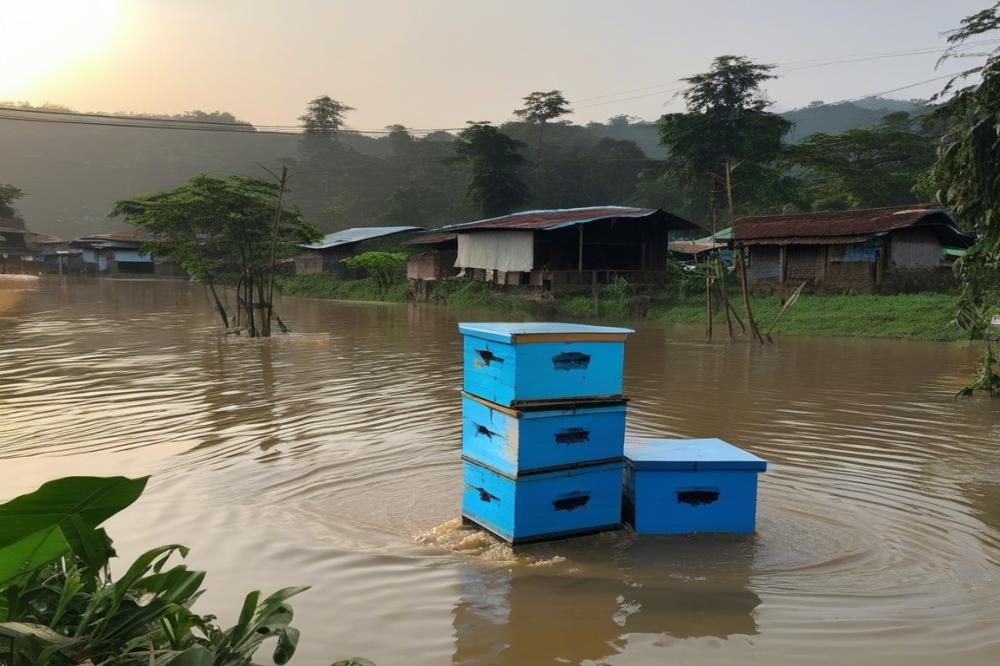
Heavy monsoon rains have caused severe flooding throughout the Imphal East District, significantly disrupting beekeeping operations. These floods have not only damaged infrastructure but also devastated many bee colonies. Beekeepers report almost complete losses of their hives, as swarms of bees have been unable to survive the deluge.
Due to heavy rains and inundated farmlands, the usual forage and nectar sources for the bees have diminished. This has created an additional burden on the beekeeping community, as environmental conditions have left the bee population struggling to find food. The swarm decline means lower honey yields, which directly affects the livelihoods of many in the district.
Farmers with whom beekeepers often work closely also suffered greatly, as their fields remained underwater for prolonged periods. This has caused a ripple effect, impacting not only honey production but also the agricultural yield necessary for local sustenance. Efforts to pump out the water have been continual but challenging, given the relentless rain.
Support from local authorities and NGOs has provided some relief, but challenges remain substantial. These entities have delivered supplies and assistance, though the battle against environmental and economic strain continues. The bee population’s recovery will likely be painstaking, impacting honey availability and farming synergy for the foreseeable future.
Within this month alone, the beekeeping community has seen the destruction of years of consistent labor. Many households depend on honey production as a primary income source, and the floods have jeopardized their economic stability. Limited access to necessary supplies such as bee feed and medicine has only compounded these issues.
The adverse weather has essentially pushed local beekeepers to a brink, where the recovery might demand considerable time and resources. Connections between agriculture and beekeeping underline the interdependent relationship that sustains both sectors. Rebuilding this synergy seems crucial for holistic recovery and future resilience.
Read the full story by: Imphal Times.
“`